In the intricate world of printed circuit board manufacturing, material selection is the foundation of product success. As we navigate 2025, the demand for high-reliability electronics in sectors like AI, medical devices, and industrial control continues to surge. At Yichao Quick Technology Co., Ltd, with over a decade of dedicated experience, we know that the choice of substrate defines the lifespan and performance of your device. Today, we dive deep into the industry’s most ubiquitous standard: FR-4 PCB Material.
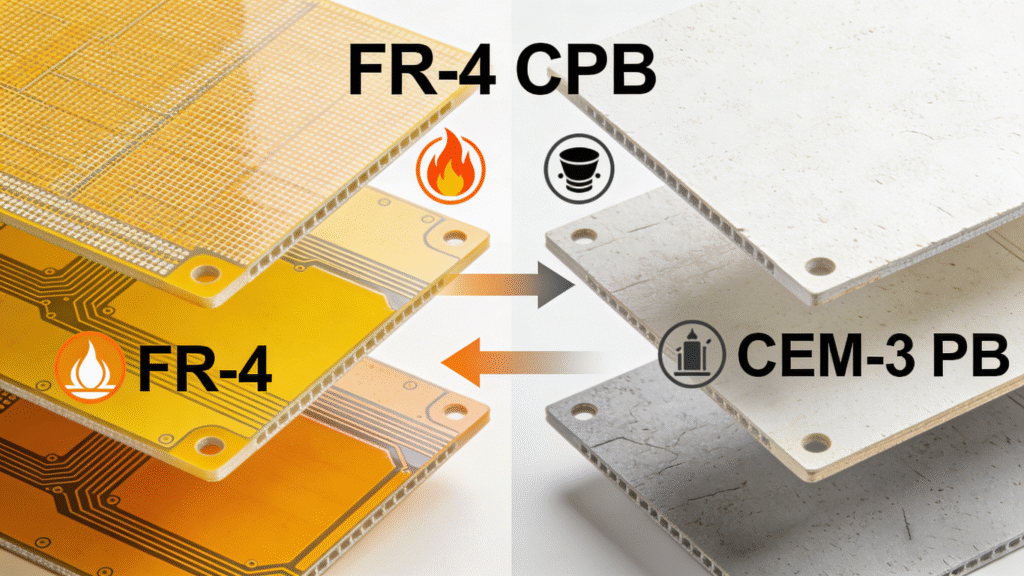
1. What is FR-4? Decoding the Standard
A common misconception among procurement professionals is that FR-4 is a specific material name. In reality, FR-4 is a material grade defined by NEMA (National Electrical Manufacturers Association). The “FR” stands for “Flame Retardant,” and the number “4” indicates the specific class.
Essentially, FR-4 designates that the resin material must be able to self-extinguish when in a burning state. It is a composite material composed of woven electronic-grade glass fiber cloth impregnated with an epoxy resin binder that is flame resistant. This unique composition allows it to withstand high heat and mechanical stress, making it the preferred choice for Yichao’s global client base.
We generally categorize FR-4 into two physical forms:
- Rigid FR-4 Board: Common thicknesses range from 0.8mm to 3.2mm, providing structural stability for standard components.
- Thin FR-4 Board: Thicknesses less than 0.78mm, used in applications requiring a lower profile or slight flexibility.
2. Key Technical Indicators of High-Quality FR-4
Not all FR-4 is created equal. At Yichao, we source materials from top-tier suppliers like Shengyi and Rogers to ensure consistency. When evaluating FR-4 PCB Material, engineers must look at specific technical benchmarks:
- Flame Retardancy (UL94V-0): The ability to stop burning within a specified time.
- Glass Transition Temperature (Tg): The point at which the resin turns from a rigid state to a pliable one. High Tg boards are essential for high-temperature environments.
- Dielectric Constant (Dk): Affects signal integrity, crucial for high-speed transmission.
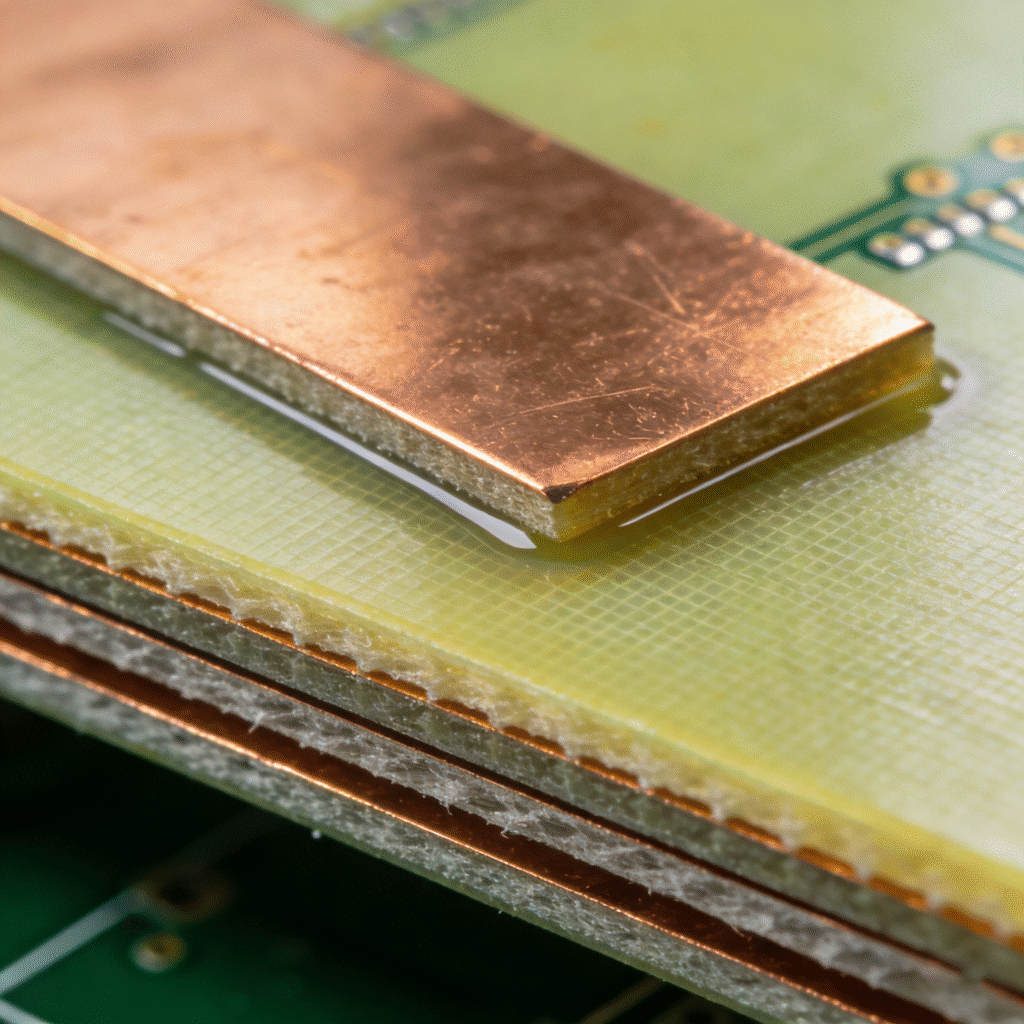
- Peel Strength: The adhesion strength between the copper foil and the substrate.
- Dimensional Stability & Warp: Ensuring the board remains flat during the reflow soldering process.
3. Why Choose FR-4? Advantages in Manufacturing
The “Epoxy Glass Fiber Cloth Laminate” (often called epoxy board or fiberglass board) dominates the market for a reason. Its high strength and excellent heat resistance make it vastly superior to older technologies.
Most importantly, FR-4 PCB Material supports through-hole metallization. This capability allows for the creation of double-sided and multilayer printed c