When you log into an online ordering system to place a PCB prototype order, you are often greeted with a dropdown menu for material selection. While options like Aluminum substrates or Thermoelectric Separation Copper are available for specific thermal needs, one option dominates the list: FR-4 PCB Material.
It seems that FR-4 is a necessary staple in every board factory’s inventory. But as we move through 2025, simply clicking “default” isn’t enough for high-end manufacturing. At Yichao Quick Technology Co., Ltd, we believe that understanding your material is the first step to product success. Here is what you must know about FR-4 before you hit “Order.”
1. FR-4 is a Standard Grade, Not Just a Material Name
A common misconception is that “FR-4” refers to a specific product. In reality, FR-4 (or FR4) is a NEMA (National Electrical Manufacturers Association) grade classification.
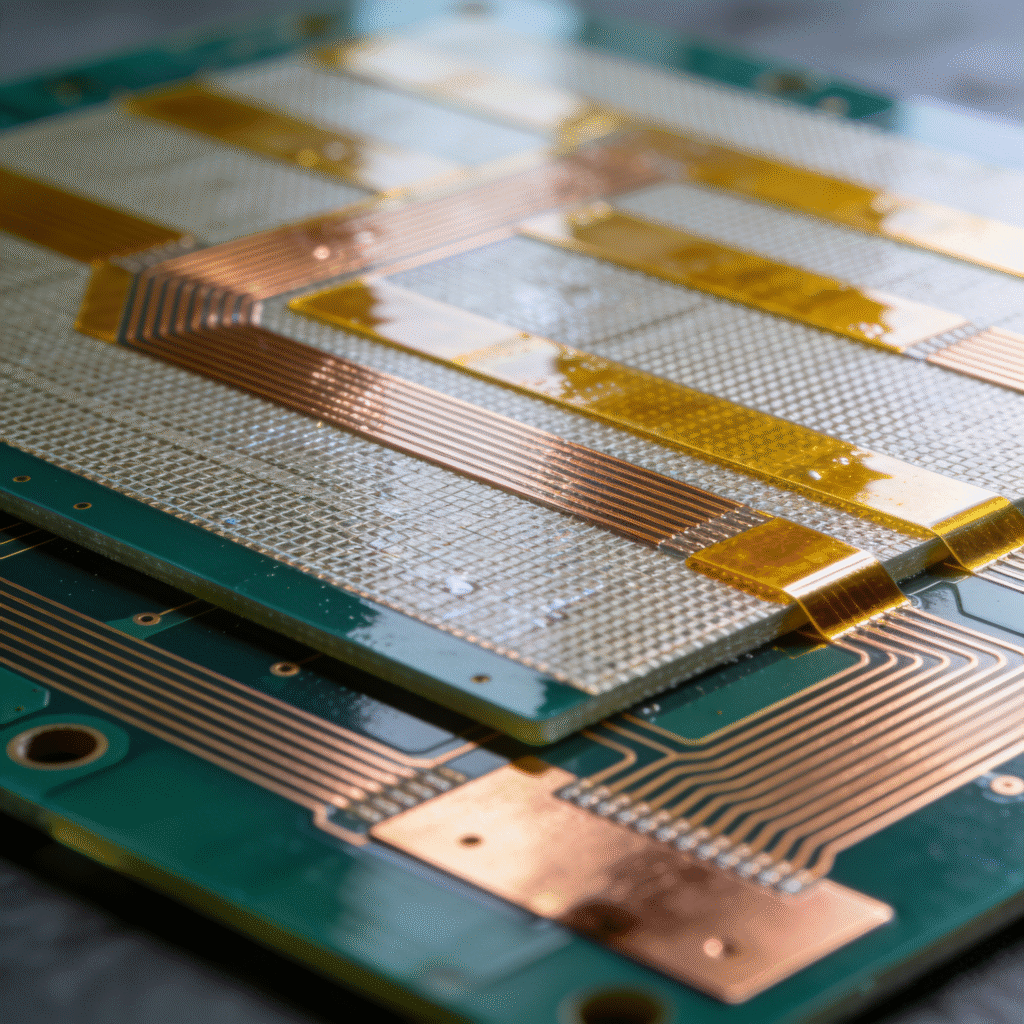
The organic substrate used for PCBs consists of three core elements:
- Resin System: Usually Epoxy Resin.
- Reinforcement: Electronic-grade Glass Fiber Cloth.
- Conductive Material: Copper Foil.
In the NEMA classification, “FR” stands for Flame Retardant. The number “4” indicates a material composed of woven glass fiber cloth and epoxy resin that meets the UL94 V-0 flame retardant rating. This distinguishes it from FR-1 or FR-2, which use paper reinforcement and have lower flame ratings (UL94 V-1).
2. Why is FR-4 the King of PCB Substrates?
In the 1950s, the industry relied on paper-based phenolic substrates (like XPC) for radios and TVs. However, these materials were prone to moisture and, critically, were not flame retardant, leading to safety hazards.
As an industry veteran, I have seen the shift firsthand. FR-4 PCB Material became the global standard for several undeniable reasons:
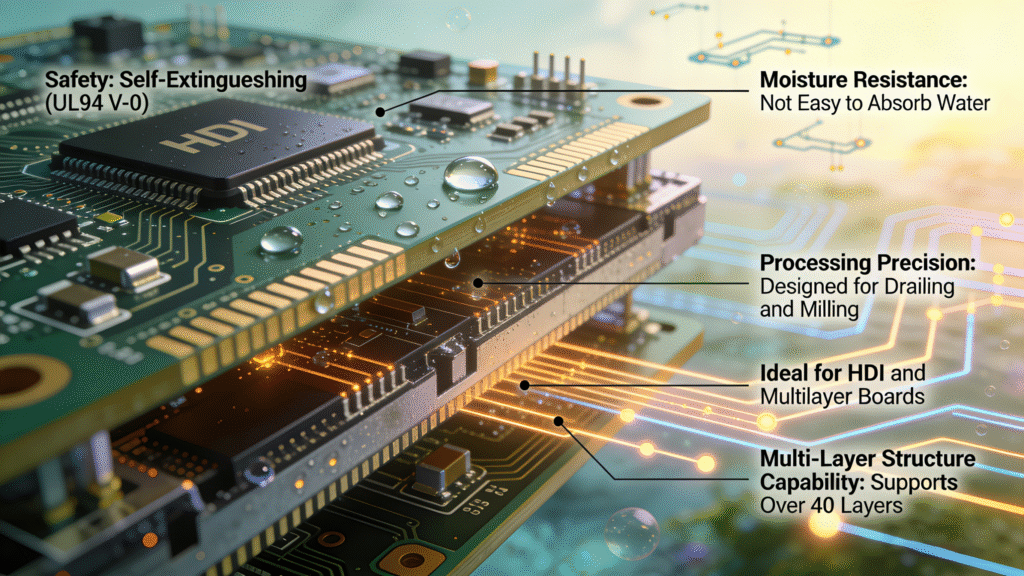
- Safety: Its self-extinguishing properties (UL94 V-0) are non-negotiable for modern safety standards.
- Moisture Resistance: Unlike paper substrates (FR-1/XPC), FR-4 does not absorb moisture easily, preventing electrical leakage.
- Processing Precision: Paper substrates are generally punched, which is imprecise. FR-4 is designed for drilling and milling, making it essential for High-Density Interconnect (HDI) and multilayer boards.
- Multilayer Capability: Paper boards generally cannot support inner layers. FR-4’s structural stability allows Yichao to manufacture boards with up to 40+ layers.
3. The Critical Metric: Understanding Tg (Glass Transition Temperature)
If you are designing for high-reliability sectors like automotive or industrial control, “Standard FR-4” might not be enough. You need to look at the Tg value.
Tg refers to the temperature at which the rigid epoxy resin softens and enters a deformable state. While this is reversible, exceeding the Tg can cause Z-axis expansion and potential failure.
Comparison of FR-4 Tg Levels:
| Classification | Tg Temperature | Recommended Application |
|---|---|---|
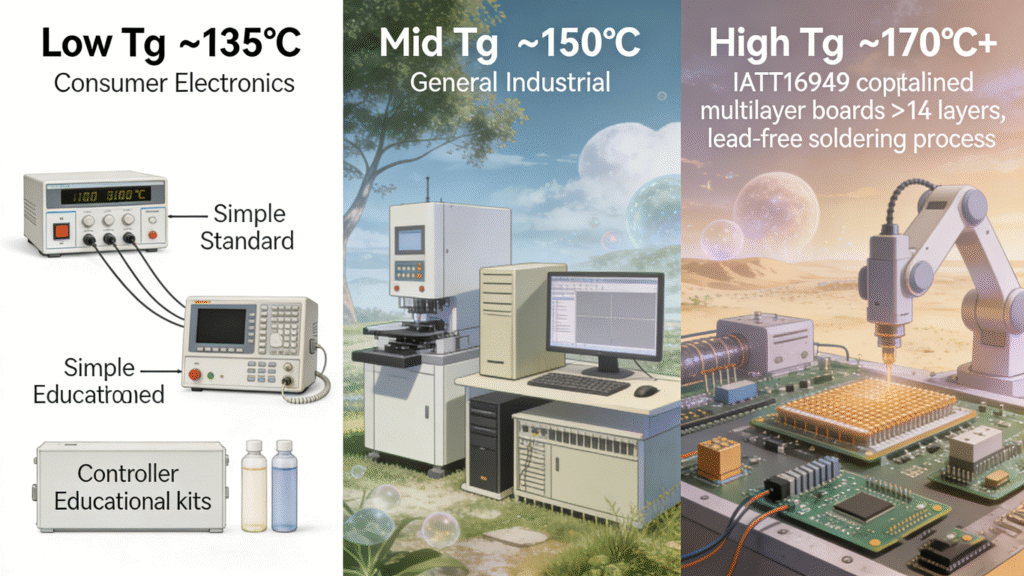
| Low Tg (Standard) | ~135°C | Consumer electronics, simple controllers, educational kits. |
| Mid Tg | ~150°C | General industrial equipment, computers, instrumentation. |
| High Tg | ~170°C+ | Automotive (IATF16949 req), Multilayer boards (>14 layers), Lead-free soldering processes. |
Pro Tip: If your board undergoes multiple pressing cycles or operates in environments over 100°C, always specify High Tg FR-4.
4. Beware of Quality Differences in the Market
Not all FR-4 is created equal. The diversity of the market means that while two materials might both be labeled “FR-4,” their performance can differ vastly.
Some manufacturers cut corners by using “Grade B” materials with fewer fabric weaves or inferior resins to lower costs. This increases the risk of warping and delamination. At Yichao Quick Technology, we promise to provide Genuine A-Grade Boards. We utilize materials from top-tier suppliers like Shengyi and Rogers, ensuring consistent dielectric constants (Dk) and loss factors (Df).
Conclusion: Choose the Right Foundation for Your Design
Selecting the correct substrate is not just a box to check; it is an engineering decision. While standard FR-4 covers 80% of general applications, high-performance designs require a deeper look at Tg and loss parameters.
With Yichao’s 1-minute online ordering system, you can easily select between standard FR-4, High-Tg options, and even Aluminum substrates for heat dissipation. We combine big data with our ISO9001-certified manufacturing to ensure your prototype is built on a foundation of quality.
Ready to verify your design? Upload your file to Yichao today and experience the difference of true A-Grade FR-4 manufacturing.