
In the fast-paced world of B2B electronics manufacturing, a single specification on your Bill of Materials (BOM) can determine the difference between a product that lasts a decade and one that fails in the field. That specification is Tg (Glass Transition Temperature).
At Yichao Quick Technology Co., Ltd, we process thousands of orders daily for clients ranging from AI startups to automotive giants. A recurring question we face is: “Do I really need High Tg FR-4, or is Standard FR-4 enough?”
To answer this, we must look beyond cost and understand the thermal physics of your PCB. This guide will help you navigate the Low, Mid, and High Tg spectrum to prevent catastrophic failures like delamination.
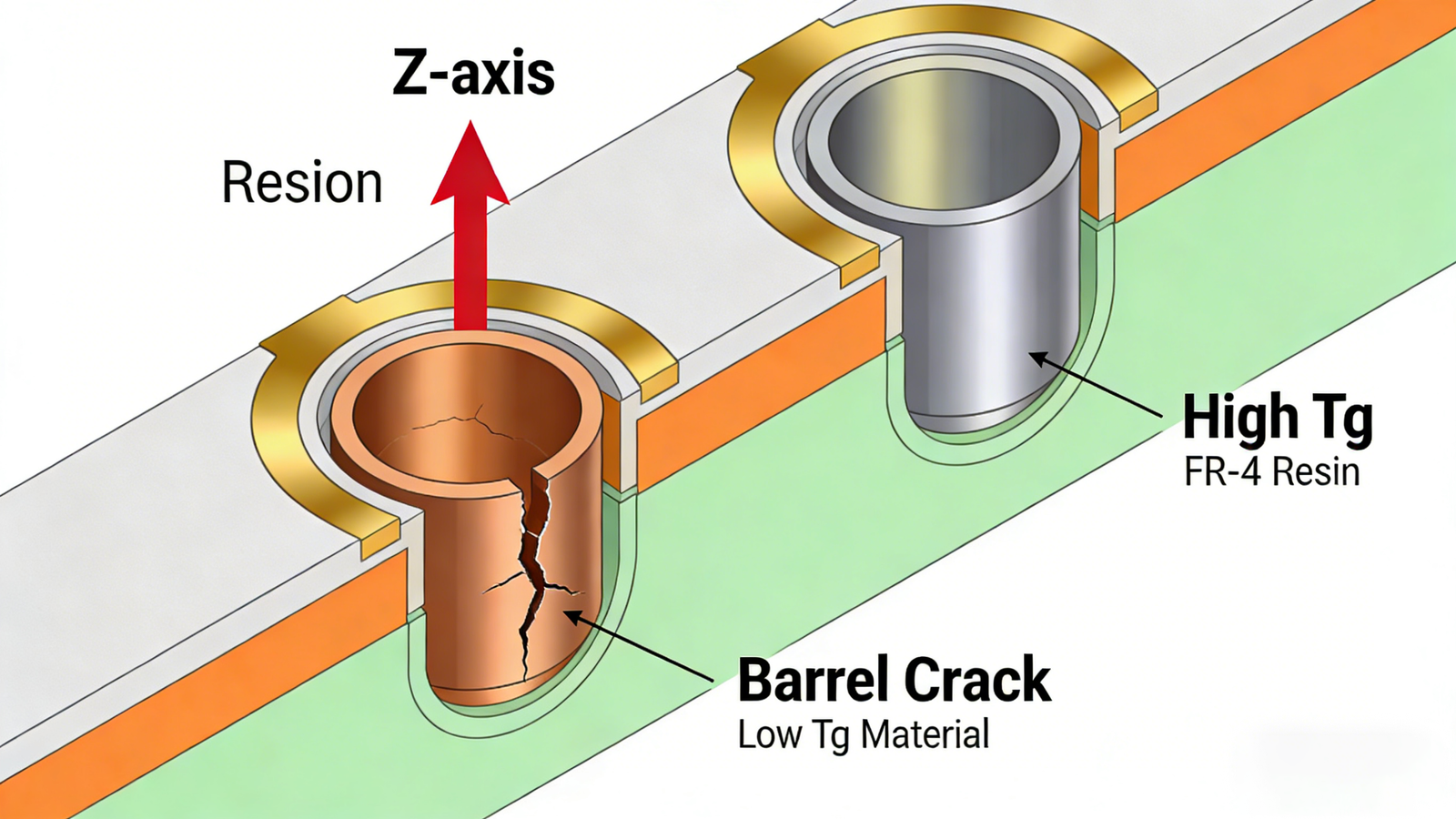
1. What is Tg and Why Does it Matter?
Tg stands for Glass Transition Temperature. It is the critical temperature point at which the epoxy resin in the FR-4 material transitions from a rigid, “glassy” state to a soft, deformable, “rubbery” state.
It is important to note: Tg is not the melting point. However, once the operating temperature exceeds the Tg value, the material’s physical properties change drastically:
- Mechanical Strength drops.
- Adhesion weakens (leading to delamination).
- Thermal Expansion (CTE) skyrockets.
2. The Three Tiers of FR-4
To make an informed choice, you must understand the industry classifications. At Yichao, we source premium laminates from suppliers like Shengyi and Rogers to fit these three categories:
Standard (Low) Tg FR-4 (Tg 130°C – 140°C)
This is the baseline material. It is cost-effective and easy to process.
- Best for: Simple consumer electronics, toys, controllers, and devices with low layer counts (1-4 layers) that operate in room temperature environments.
- Limitation: Not suitable for lead-free soldering processes (which require temps up to 260°C) or harsh industrial environments.
Mid Tg FR-4 (Tg 150°C – 160°C)
Often considered the “Performance Standard.” It offers a better balance of thermal stability and cost.
- Best for: Computers, instrumentation, and general industrial equipment.
- Advantage: Better resistance to moisture and chemical erosion than standard Tg materials.
High Tg FR-4 (Tg ≥ 170°C)
The heavy lifter of the PCB world. High Tg materials have a much stronger resin matrix.
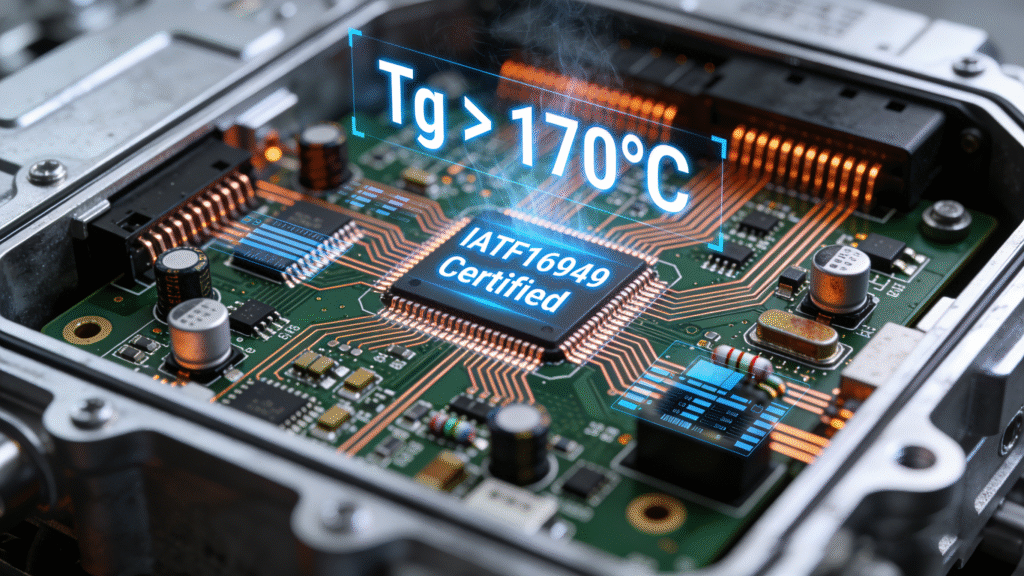
- Best for: Multilayer boards (8+ layers), Automotive electronics (under-hood applications), High-power LED lighting, and AI servers.
- Critical Feature: Low Z-axis expansion. This prevents pad cratering and via fracture during the intense heat of reflow soldering.
3. How to Select the Right FR-4 for Your Application
How do you decide? As a rule of thumb, the operating temperature of your device should always be at least 10-20°C lower than the Tg of the material. However, manufacturing stresses are often the deciding factor.
Scenario A: You are using Lead-Free Soldering
Lead-free assembly requires reflow temperatures between 240°C and 260°C. Standard Low Tg materials can struggle to survive multiple reflow cycles without warping or delaminating.
Recommendation: Choose Mid Tg or High Tg.
Scenario B: You are designing a Multilayer Board (HDI)
As layer count increases, the density of vias increases. The cumulative stress of thermal expansion in a thick board is immense.
Recommendation: For 8 layers or more, or any HDI design with blind/buried vias, High Tg is mandatory to ensure the reliability of the interconnects.
Scenario C: High Power & Harsh Environments
If your device sits inside a car engine bay, an outdoor 5G base station, or handles high currents, ambient heat plus self-heating will push the material to its limit.
Recommendation: High Tg (≥170°C) is the only safe choice.
Conclusion: Reliability Starts with the Substrate
Saving a few cents on a lower Tg material is rarely worth the risk of a field failure or a recall. By aligning your material selection with your manufacturing process and end-use environment, you ensure the longevity of your product.
Need help choosing? When you upload your Gerber files to Yichao’s online quoting system, our engineers review your design requirements. We are ready to guide you toward the perfect FR-4 solution for your next innovation.