In the high-stakes world of B2B electronics manufacturing—from AI servers running 24/7 to automotive power systems—heat is the silent assassin. As a veteran in the PCB industry, I have seen countless designs fail not because of circuit logic, but because the substrate couldn’t handle the thermal load.
At Yichao Quick Technology Co., Ltd, we don’t just manufacture boards; we stress-test them to the limit. Understanding PCB Thermal Stress is crucial for ensuring product longevity. Today, we are opening our lab doors to reveal how five mainstream materials perform when the heat turns up, helping you choose the perfect foundation for your 2025 projects.
The Litmus Test: Understanding Thermal Stress (T260, T288, and CTE)
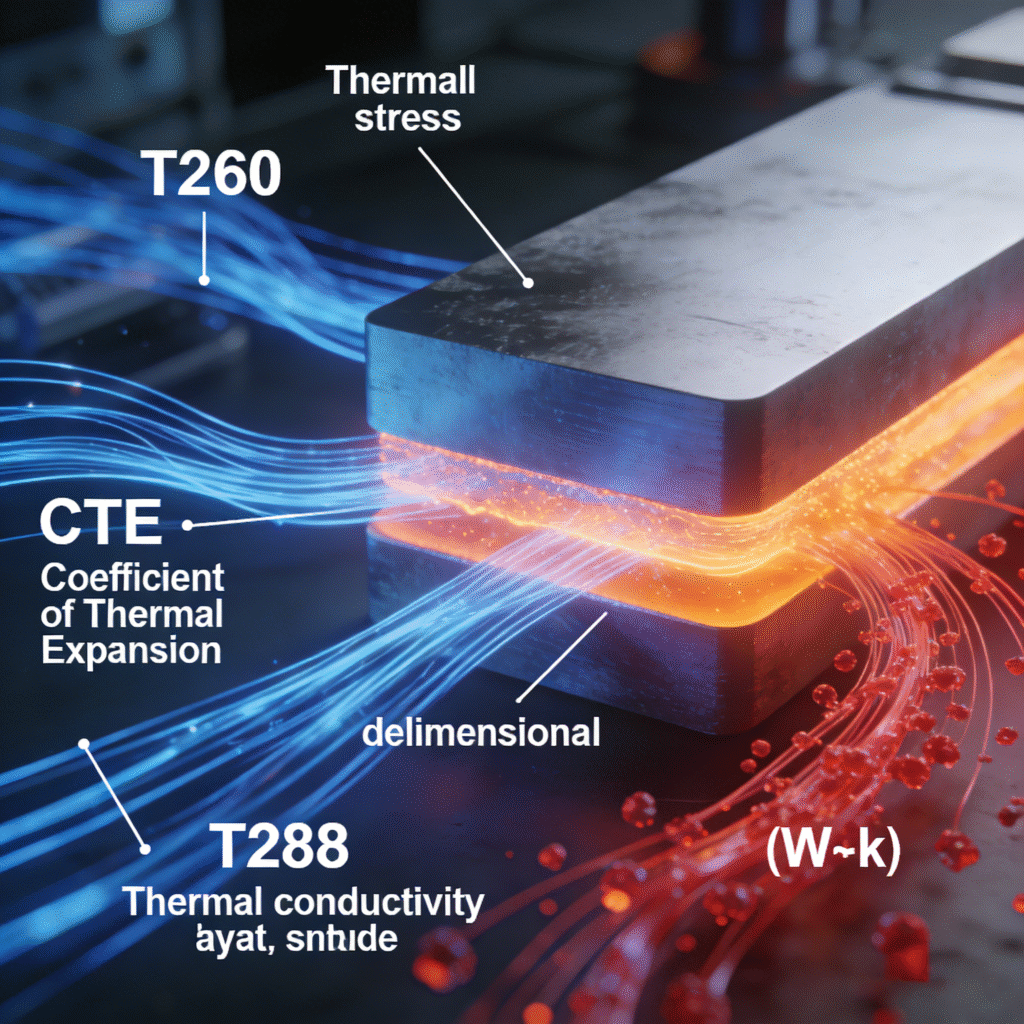
Before diving into the materials, we must understand the “exam” they are taking. Thermal stress testing evaluates how a material expands and behaves under extreme heat. The most critical enemies are:
- CTE (Coefficient of Thermal Expansion): Materials expand when heated. If the Z-axis expansion is too high, it can snap the copper plating inside the via holes, causing an open circuit.
- Delamination: If the resin loses adhesion at high temperatures (measured by tests like T260 and T288), the layers separate, destroying the board.
- Thermal Conductivity (W/m·k): How fast can the material move heat away from the component?
The Showdown: 5 Mainstream Materials Compared
Based on Yichao’s extensive inventory and manufacturing data, here is how the top contenders stack up.
1. Standard FR-4: The Cost-Effective Generalist
Performance: Baseline
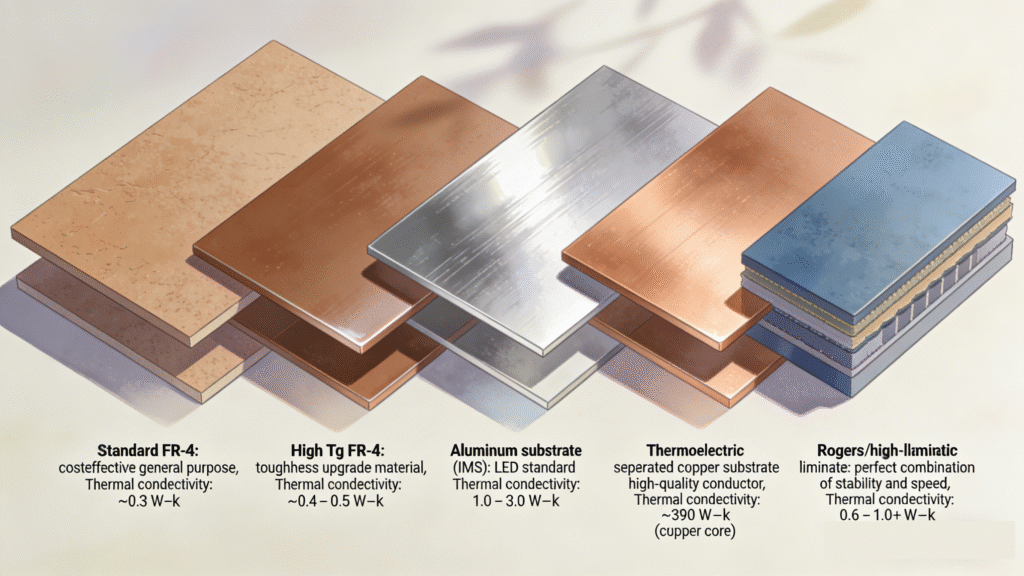
Thermal Conductivity: ~0.3 W/m·k
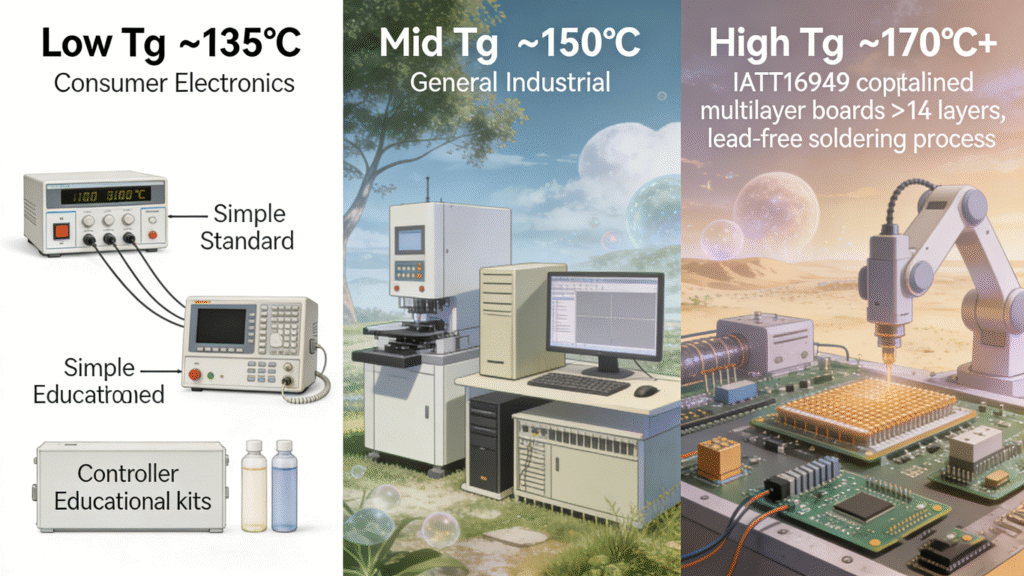
As the industry standard, Standard FR-4 is the workhorse of electronics. It is composed of epoxy resin and woven glass fiber. While it offers excellent electrical insulation and mechanical strength for general devices, its thermal performance is modest. Under high thermal stress, standard FR-4 (Low Tg ~135°C) can soften, leading to higher Z-axis expansion. It is perfect for consumer electronics but struggles with high-power dissipation.
2. High Tg FR-4: The Resilient Upgrader
Performance: Reliable
Thermal Conductivity: ~0.4 – 0.5 W/m·k
When your operational environment exceeds 100°C or requires lead-free soldering (which uses higher temperatures), High Tg FR-4 is the mandatory upgrade. With a Glass Transition Temperature (Tg) of 170°C or higher, this material maintains its rigid state longer than standard FR-4. In our reliability tests, High Tg boards show significantly less expansion during reflow soldering, making them the standard choice for Yichao’s industrial control and automotive clients.
3. Aluminum Substrate (IMS): The LED Standard
Performance: Efficient Cooling
Thermal Conductivity: 1.0 – 3.0 W/m·k
Now we enter the realm of Metal Core PCB (MCPCB). Aluminum substrates consist of a copper circuit layer, a thin dielectric layer, and a thick aluminum base. This structure acts as a massive heatsink. In thermal stress tests, aluminum excels at rapidly spreading heat across the surface, lowering the operating temperature of components like LEDs. However, it is generally limited to single-layer designs due to manufacturing complexity.
4. Thermoelectric Separation Copper Substrate: The Elite Conductor
Performance: Extreme Performance
Thermal Conductivity: ~390 W/m·k (Copper Core)
This is one of Yichao’s specialized offerings for high-power applications. In a standard MCPCB, the heat must pass through a dielectric layer (which insulates electricity but also slows heat). In our Thermoelectric Separation technology, the component’s thermal pad connects directly to the copper base without an insulating layer in between. This offers virtually zero thermal resistance. It is the ultimate solution for automotive headlights and high-frequency power amplifiers where standard Aluminum boards fail.
5. Rogers/High-Frequency Laminates: Stability Meets Speed
Performance: High Stability
Thermal Conductivity: 0.6 – 1.0+ W/m·k (varies by grade)
Materials like the Rogers (Arlon) series are ceramic-filled composites designed for RF and microwave circuits. While known for signal integrity, they also possess excellent thermal stability. Their CTE is often matched closely to copper, meaning that as the board heats up, the material expands at the same rate as the copper traces. This synchronization drastically reduces the stress on plated through-holes, ensuring high reliability in aerospace and 5G communications.
Yichao’s Recommendation
For 80% of digital circuits, High Tg FR-4 is the safest balance of cost and reliability. However, if your device involves power conversion or high-brightness lighting, moving to Aluminum or Thermoelectric Separation Copper is not just an option—it’s an engineering necessity.
Conclusion: Don’t Let Heat Compromise Your Brand
Selecting the right material is about matching the substrate’s capabilities to your product’s thermal reality. At Yichao Quick Technology, we leverage big data and ISO-certified processes to ensure that whether you choose FR-4 or an advanced Copper Core, your board will survive the heat.
Ready to put your design to the test? Upload your files to our online quoting system today for a “1-minute order,” and let our engineering team help you select the optimal material for your next breakthrough.