
In the world of industrial electronics, there is no sound more expensive than the silence of a failed board. Over my years in this industry, I have seen robust designs crumble not because of bad logic, but because of invisible physical failures within the board’s substrate. Among these, **PCB Delamination** is the silent killer—a separation of layers that severs connections and renders devices useless. At **Yichao**, we don’t just manufacture boards; we engineer reliability. This guide explores how rigorous **Thermal Stress Testing** separates premium manufacturing from potential failure.
1. Understanding the Enemy: What Causes PCB Delamination?
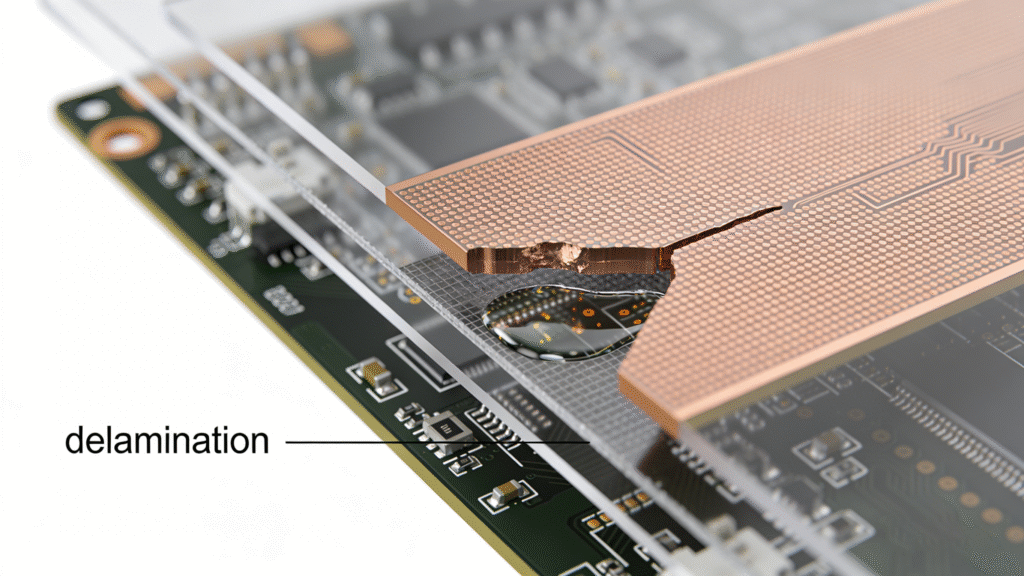
To prevent failure, you must first understand the physics of the materials. A Printed Circuit Board is a composite sandwich of copper, epoxy resin, and glass fiber. These materials have different rates of expansion when heated, known as the Coefficient of Thermal Expansion (CTE).
When a board is subjected to the extreme heat of reflow soldering (often exceeding 240°C) or harsh operating environments, the materials expand. If moisture is trapped inside the board, it turns into high-pressure steam. This internal pressure, combined with the mechanical stress of uneven expansion (CTE mismatch), forces the layers apart. This separation is **PCB Delamination**. It creates blisters, breaks plated through-holes (PTH), and leads to catastrophic open circuits.
2. The Crucible: How Thermal Stress Testing Works
How do we ensure that the boards leaving our Shenzhen facility can withstand these forces? We subject them to controlled torture. This is known as **Thermal Stress Testing** or the “solder float test,” often performed according to the **IPC-TM-650 Standard**.
The process is brutal but necessary. We take a sample coupon from the production lot and float it on molten solder at 288°C for 10 seconds. We then inspect the board for:
- **Blistering or Measling:** Visible separation of the laminate.
- **Barrel Cracks:** Fractures in the copper plating of the holes due to Z-axis expansion.
- **Pad Lifting:** Copper pads detaching from the substrate.
If a sample fails this test, the entire batch is flagged for **PCB Failure Analysis**. This proactive approach ensures that only boards capable of surviving the harshest assembly processes make it to your production line.
3. Yichao’s Approach: Engineering Out the Risk
Preventing delamination isn’t just about testing; it’s about the manufacturing recipe. At **Yichao**, we implement a multi-layered defense strategy against thermal stress.
Material Selection Matters
Low-quality FR4 materials have a low Glass Transition Temperature (Tg). Once the temperature exceeds Tg, the material becomes soft and expands rapidly. For **High-Reliability Circuit Board Design**, especially in automotive (IATF16949 certified) or industrial control sectors, we recommend and utilize High-Tg materials (Tg ≥ 170°C). We source from top-tier suppliers like Shengyi, Rogers, and Taconic to ensure the base material has a stable CTE.
Moisture Control: The Baking Process
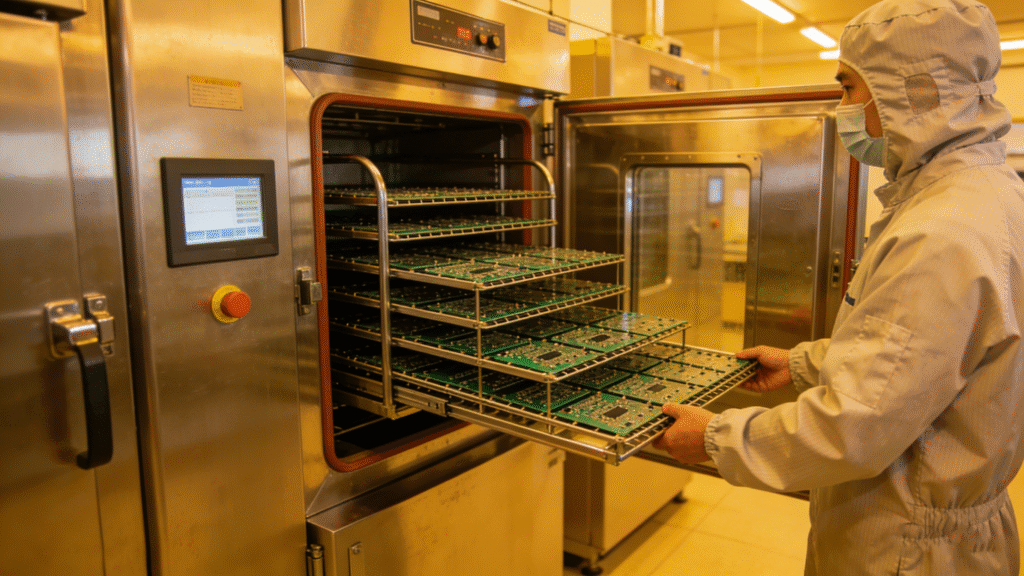
Since moisture is the primary catalyst for delamination, control is paramount. Our factory utilizes strict storage environments for pre-preg materials. Before lamination and assembly, boards undergo controlled baking cycles to drive out any absorbed humidity. This simple but critical step eliminates the “popcorn effect” during reflow soldering.
4. Validating Reliability: The Yichao Quality Guarantee
Why do over 1 million users across 200 countries trust **Yichao**? Because our commitment to quality is backed by data. We don’t just claim to prevent delamination; we prove it.
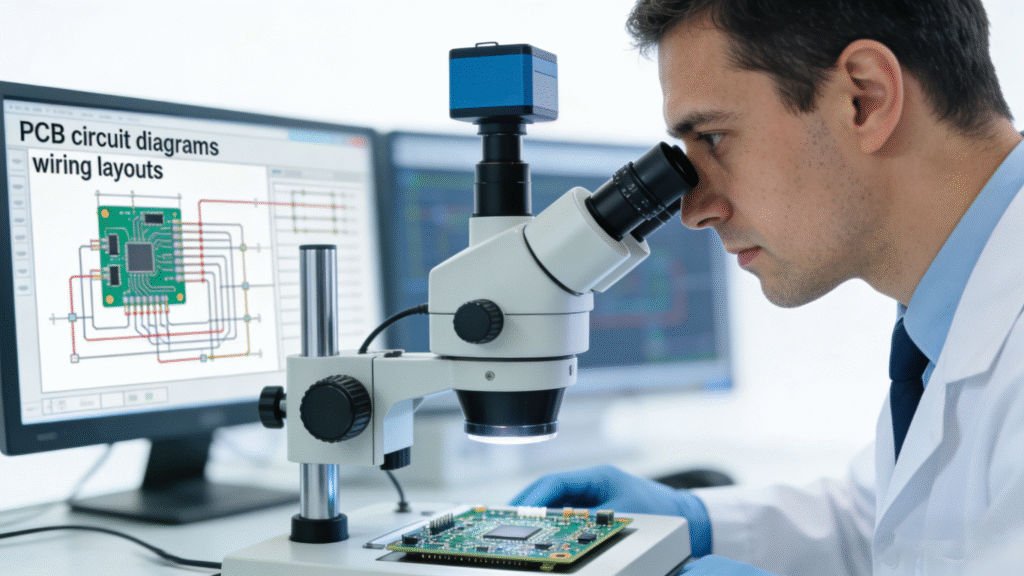
Our facility, equipped with LDI exposure machines and advanced lamination presses, ensures consistent bonding pressure and temperature profiles. Every batch undergoes AOI (Automated Optical Inspection) and, crucially, micro-sectioning analysis to verify the internal integrity of the vias and layer bonding.
Whether you require HDI blind/buried via technology or thick copper power boards, our process remains consistent: **Quality First.** We are an ISO9001:2015, ISO13485 (Medical), and IATF16949 (Automotive) certified facility. This means our **Thermal Stress Testing** protocols are not just guidelines—they are rigid standards we live by.
5. Conclusion: The Cost of Quality vs. The Cost of Failure
In B2B procurement, the lowest price per unit often hides the highest cost of ownership. A board that delaminates in the field destroys brand reputation and incurs massive recall costs. By choosing **Yichao**, you are investing in a **High-Reliability Circuit Board Design** philosophy that prioritizes longevity.
From our 1-minute online pricing to our 12-hour fast shipping, we offer speed without compromising on the rigorous testing that protects your investment. Let us handle the thermal stress, so your products don’t have to.