
In the relentless pursuit of product miniaturization, mechanical engineers and hardware designers frequently encounter a severe bottleneck: spatial constraints. When designing next-generation medical wearables, advanced aerospace instrumentation, or compact AI-driven devices, traditional rigid electronics simply cannot fit into unconventional, three-dimensional spaces. As an industry veteran with over a decade of hands-on manufacturing experience, the question I hear most often from procurement teams looking to break these physical barriers is: What is FPC?
FPC stands for Flexible Printed Circuit. It is a highly specialized interconnect technology that allows electronic pathways to bend, fold, and twist without compromising signal integrity or mechanical strength. This guide will demystify flexible circuitry for B2B buyers, exploring its unique properties, manufacturing complexities, and why it is rapidly becoming the backbone of modern industrial innovation.
1. Demystifying the Flexible Printed Circuit Board
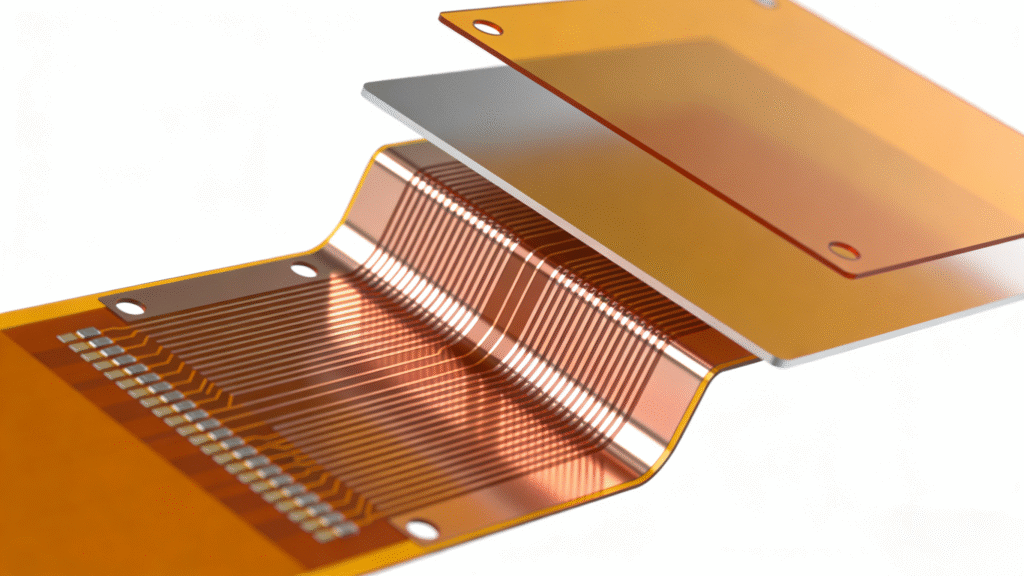
At its core, a Flexible Printed Circuit Board is a patterned arrangement of printed circuitry and components that utilizes a flexible based material with or without a flexible coverlay. Unlike standard FR-4 boards that use rigid fiberglass epoxy, FPCs are predominantly built on Polyimide (PI) films.
Polyimide is an extraordinary engineering polymer. It offers exceptional thermal stability, chemical resistance, and, most importantly, mechanical flexibility. Bonded to this PI substrate is a layer of ultra-thin copper foil—either rolled-annealed (RA) for dynamic, high-flexing applications, or electrodeposited (ED) for static, bend-to-install scenarios. Instead of a rigid solder mask, FPCs utilize a flexible coverlay to encapsulate and protect the delicate copper traces from oxidation and electrical shorting.
2. FPC vs Rigid PCB: Making the Right Engineering Choice
When engineering a new product, deciding between a flexible or rigid architecture is a critical crossroad. Understanding the nuances of FPC vs Rigid PCB is essential for optimizing both cost and performance.
Rigid PCBs are incredibly cost-effective for flat, static applications where space is not an issue. They excel at supporting heavy components and dissipating high heat. However, FPCs offer unparalleled advantages when design constraints are tight:
- Weight and Space Reduction: FPCs are up to 70% lighter and significantly thinner than their rigid counterparts, making them indispensable for portable and wearable technology.
- Dynamic Flexing: A properly designed FPC can withstand millions of bending cycles, replacing bulky wiring harnesses and connectors in moving parts like printer heads or robotic arms.
- 3D Packaging: FPCs conform to the shape of the product’s enclosure, allowing engineers to utilize every cubic millimeter of space efficiently.
3. Navigating the FPC Manufacturing Process
While the benefits are immense, the FPC Manufacturing Process is notoriously complex. Because the materials are thin and pliable, they are prone to stretching, shrinking, and tearing during fabrication. Handling these materials requires specialized, roll-to-roll or highly customized panel-handling equipment.
One of the most critical steps in the process is the application of stiffeners. Since flexible boards cannot support heavy components (like large BGAs or connectors) on their own, manufacturers must strategically laminate rigid materials—such as FR-4, Polyimide, or even stainless steel—to specific areas of the FPC. This creates localized rigidity precisely where components will be soldered, without sacrificing the overall flexibility of the board. Precision laser cutting is then employed to achieve tight dimensional tolerances and complex outlines.
4. The Pinnacle of Integration: Rigid-Flex PCB Assembly
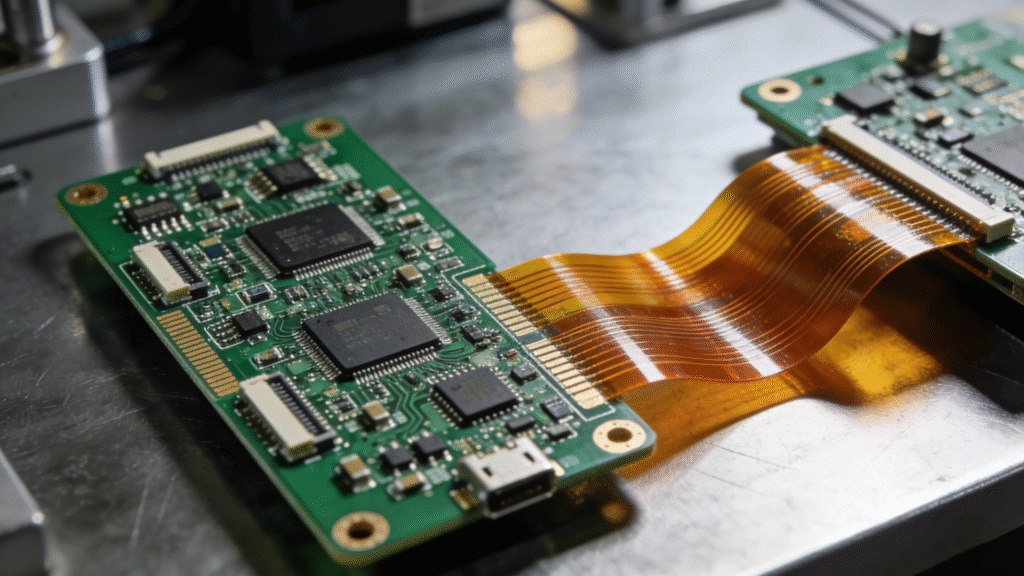
For the most demanding B2B applications, engineers often realize that neither a pure FPC nor a pure rigid board is sufficient. The ultimate solution is the “soft-hard combination” or rigid-flex technology. This architecture integrates rigid FR-4 zones and flexible polyimide zones into a single, cohesive unit.
Mastering Rigid-Flex PCB Assembly is a hallmark of elite manufacturing. At Yichao, we seamlessly integrate high-precision capabilities, such as HDI blind and buried vias, into rigid-flex designs. This eliminates the need for bulky, unreliable connectors between separate boards, drastically reducing the points of failure, lowering assembly time, and enhancing overall signal integrity in high-vibration environments like automotive or aerospace control systems.
5. Sourcing Your Custom Flexible PCB with Yichao
Designing an advanced flexible circuit is only half the battle; partnering with a manufacturer capable of executing your vision flawlessly is paramount. Procuring a Custom Flexible PCB requires a supplier with deep industry experience and an unyielding commitment to quality control.
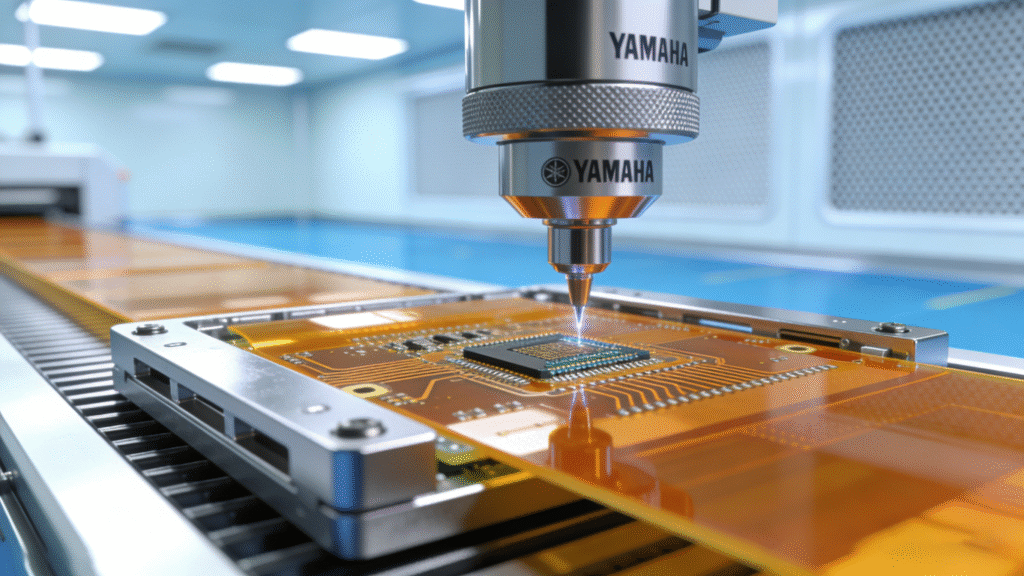
With over 13 years of technical accumulation, Yichao stands at the forefront of intelligent manufacturing. We are an ISO9001:2015, ISO13485 (Medical), and IATF16949 (Automotive) certified facility. Our digital smart factory is equipped to handle the entire lifecycle of your project, from prototype design to high-volume SMT surface mount assembly. Our 25 Yamaha surface mount machines and rigorous AOI/X-RAY testing protocols ensure that every delicate FPC is assembled with perfect precision, boasting a 99.8% product pass rate.
Conclusion
Understanding what an FPC is opens the door to limitless design possibilities. By leveraging flexible and rigid-flex technologies, you can engineer products that are lighter, more durable, and highly compact. However, the delicate nature of flexible circuitry demands a manufacturing partner with proven expertise and cutting-edge equipment. When your design requires both extreme flexibility and uncompromising reliability, trust Yichao to bring your vision to life.